When it comes to protecting your vehicle’s paint, two options dominate the conversation: traditional wax and ceramic coating. Both serve the same fundamental purpose — creating a barrier between your paint and the elements — but they do it in very different ways, with very different results.
If you are trying to decide which option makes sense for your vehicle, this guide breaks down the differences in composition, durability, protection, maintenance, and cost so you can make an informed choice.
How Car Wax Works
Car wax has been the go-to paint protection product for decades. Traditional carnauba wax is derived from the leaves of the Brazilian carnauba palm tree and is valued for the warm, deep glow it gives paint. Synthetic sealants, which are often grouped in the same category, use engineered polymers to achieve similar results with somewhat longer durability.
Wax works by sitting on top of your paint’s clear coat as a sacrificial layer. It fills in minor imperfections, giving the surface a smoother appearance, and provides a barrier against water, UV rays, and light contamination. When properly applied, wax produces a rich, wet-looking shine that many car enthusiasts love.
Wax Strengths
- Warm, deep shine — Carnauba wax in particular creates a warm glow that many people prefer on darker-colored vehicles.
- Easy to apply — Available as paste, liquid, or spray formulations that can be applied by hand or with a dual-action polisher.
- Low upfront cost — A quality wax costs relatively little compared to professional ceramic coating.
- Readily available — Found at any auto parts store or detail supply shop.
Wax Limitations
- Short lifespan — Most waxes last between 4 to 8 weeks before breaking down. Synthetic sealants may last up to a few months.
- Limited protection — Wax provides moderate UV protection and water beading but does not hold up well against chemical exposure, bird droppings, or heavy contamination.
- Frequent reapplication — To maintain protection, you need to reapply wax regularly throughout the year. In the Texas Panhandle, where UV exposure and dust are constant, that cycle accelerates.
- Heat sensitivity — Wax softens and breaks down faster in high temperatures, which is a real factor during Amarillo summers.
How Ceramic Coating Works
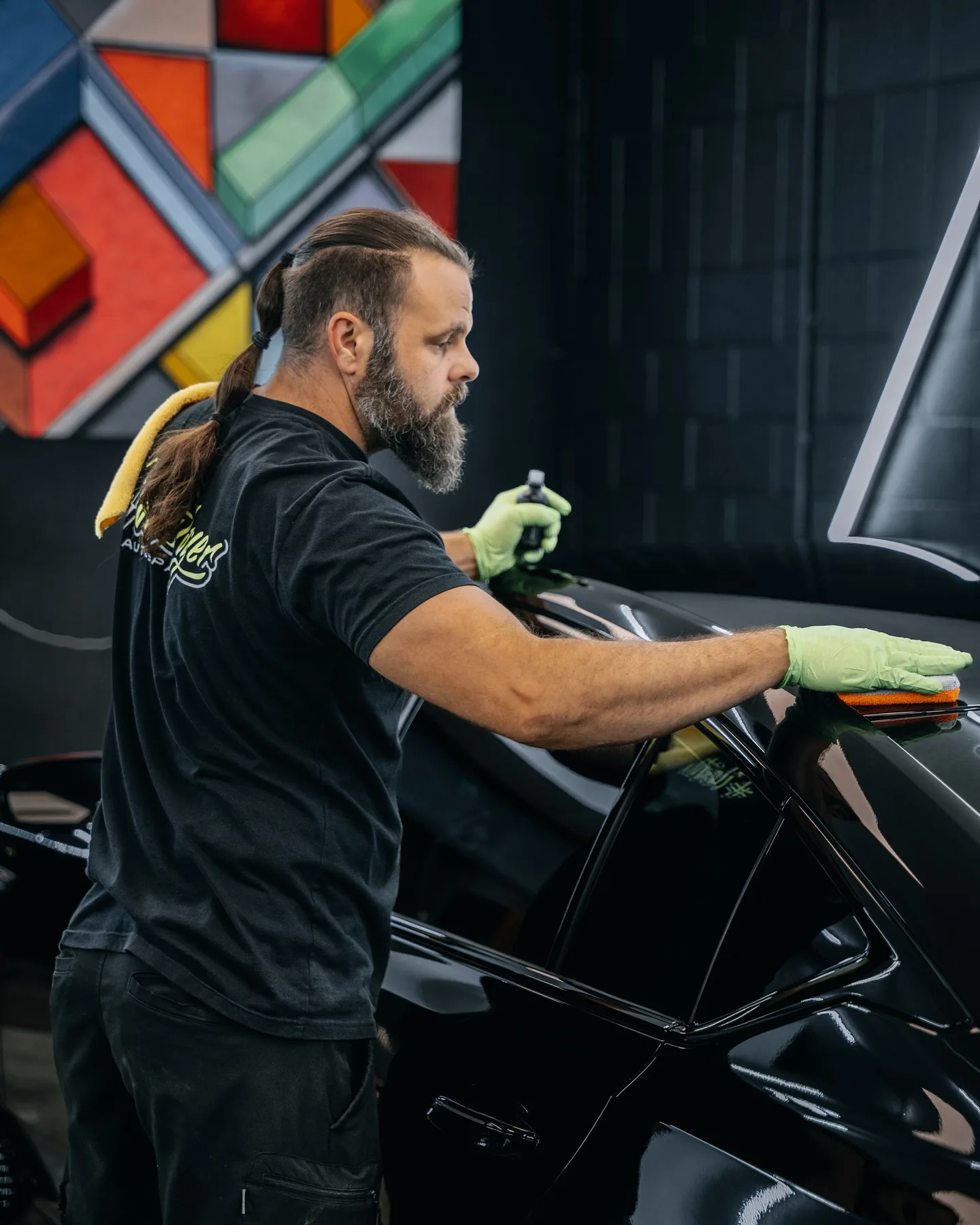
Ceramic coating is a liquid polymer that chemically bonds to your vehicle’s clear coat at a molecular level. Once cured, it forms a semi-permanent layer of protection that becomes part of the paint surface rather than sitting on top of it.
The active ingredient in most professional ceramic coatings is silicon dioxide (SiO2), sometimes combined with titanium dioxide (TiO2). When applied and cured, these compounds create an extremely hard, hydrophobic surface that repels water, resists chemical etching, and provides significant UV protection.
Ceramic Coating Strengths
- Long-lasting protection — Professional-grade ceramic coatings are designed to last far longer than any wax or sealant, providing sustained protection over extended periods.
- Superior hydrophobic properties — Water beads up and rolls off the surface, carrying dirt and contaminants with it. This self-cleaning effect keeps your vehicle looking cleaner between washes.
- Chemical resistance — Ceramic coatings resist damage from bird droppings, tree sap, acid rain, and road salt better than wax.
- UV protection — The coating acts as a sunscreen for your paint, reducing oxidation and fading caused by UV exposure.
- Easier maintenance — Because contaminants have a harder time bonding to the coated surface, washing takes less time and effort.
- Enhanced gloss — Ceramic coatings add a candy-like depth and gloss to paint that many owners find superior to wax.
Ceramic Coating Limitations
- Higher upfront cost — Professional ceramic coating is a larger initial investment than a jar of wax.
- Professional application recommended — While consumer-grade coatings exist, professional application ensures proper surface preparation, even coverage, and correct curing conditions.
- Surface preparation is critical — Ceramic coating locks in whatever is underneath it. If the paint has swirl marks or scratches, those imperfections will be sealed under the coating. This is why paint correction is typically performed before coating application. Our guide on how paint correction works explains the full process.
- Not a force field — Ceramic coating does not prevent rock chips, deep scratches, or dents. For that level of impact protection, paint protection film (PPF) is the better solution.
Head-to-Head Comparison
Durability
This is where the difference is most dramatic. Wax wears off within weeks. Synthetic sealants last a few months at best. Professional ceramic coatings are engineered for long-term durability that far exceeds traditional products. In a climate like Amarillo’s — with intense UV, blowing dust, and temperature extremes — wax breaks down especially fast.
Protection Level
Wax provides a basic barrier. Ceramic coating provides a harder, more chemically resistant barrier that handles environmental threats more effectively. Bird droppings that would etch through wax in hours have a much harder time penetrating a ceramic-coated surface. UV rays that oxidize wax-protected paint over time are significantly reduced by ceramic coating.
Appearance
Both options enhance your paint’s appearance, but they produce different looks. Wax tends to create a warm, soft glow. Ceramic coating creates a sharper, more reflective shine with noticeable depth. Many owners describe the ceramic coating look as “wet” or “candy-like.” Personal preference plays a role here, but ceramic coating generally produces a more dramatic visual result.
Maintenance
A waxed vehicle requires reapplication every month or two to maintain protection. Between applications, the protection level steadily decreases. A ceramic-coated vehicle requires only regular washing with proper technique and products to maintain its performance. The hydrophobic properties mean less dirt sticks to the surface, so washes are quicker and easier.
Cost Over Time
Wax costs less upfront, but when you factor in the time, products, and labor for reapplication every few weeks, the annual cost adds up. Ceramic coating costs more initially but requires minimal additional investment over its lifespan. When measured on a per-month or per-year basis, ceramic coating often proves to be the more economical choice for long-term protection.
Which One Is Right for You?
Consider Wax If:
- You enjoy the process of regularly waxing your vehicle as part of your car care routine
- You are on a tight budget and want basic short-term protection
- You plan to sell the vehicle soon and want a quick shine for presentation
- You prefer the warm, traditional look of carnauba wax on a classic or show car
Consider Ceramic Coating If:
- You want long-term protection without frequent reapplication
- You deal with harsh environmental conditions (dust, UV, heat — all of which describe the Texas Panhandle)
- You want to reduce the time and effort spent on maintaining your vehicle’s appearance
- You are investing in paint correction and want to lock in those results
- You plan to keep the vehicle for an extended period and want to protect its finish and resale value
The Best of Both Worlds
For maximum protection, some vehicle owners choose to layer solutions. A professional paint correction to remove existing imperfections, followed by ceramic coating for long-term protection, topped with paint protection film on high-impact areas like the hood, bumper, and fenders. This combination addresses everything from UV damage to rock chips.
Making the Decision
For most drivers in Amarillo and the Texas Panhandle, ceramic coating offers a clear advantage. The combination of sustained protection, easier maintenance, and superior resistance to the specific environmental conditions in this region makes it a strong investment in your vehicle’s long-term appearance and value.
Wax still has its place — particularly for enthusiasts who enjoy the ritual and for short-term situations — but for lasting protection in a demanding climate, ceramic coating is the more practical choice.
Interested in learning more about ceramic coating for your vehicle? Call PaintSlayer AutoSpa at (806) 680-6466 to discuss your options and get a personalized recommendation.