Your vehicle’s paint looked flawless when it rolled off the dealer lot. But after months or years of daily driving, automatic car washes, dust storms, and Texas sun, that finish has accumulated damage you might not even realize is there. Swirl marks, fine scratches, water spots, and oxidation slowly rob your paint of its depth and clarity.
That is where paint correction comes in. It is one of the most misunderstood services in auto detailing, so let’s break down exactly what it involves, why it matters, and what to expect if you decide to have it done.
What Is Paint Correction?
Paint correction is the process of removing imperfections from your vehicle’s clear coat — the transparent protective layer that sits on top of the base paint color. These imperfections include swirl marks, light scratches, water spots, bird etching, industrial fallout contamination, and oxidation.
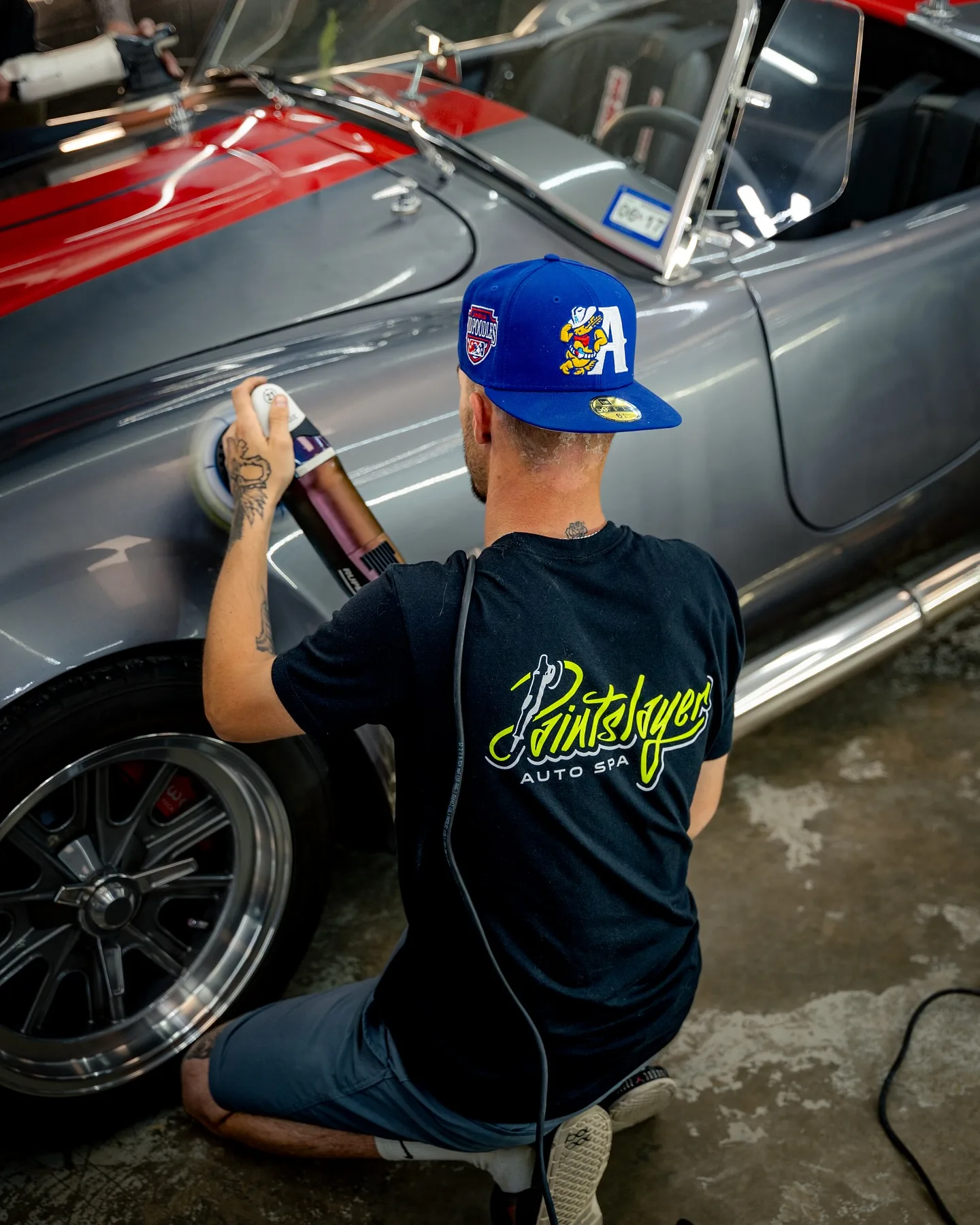
The process uses machine polishers paired with specialized compounds and polishing pads to carefully level the clear coat surface. By removing a very thin, controlled amount of clear coat material, the technician eliminates the imperfections that scatter light and make your paint look dull or hazy. The result is a surface that reflects light evenly, producing deep gloss and mirror-like clarity.
This is fundamentally different from applying a glaze or filler product that temporarily masks defects. Paint correction physically removes the damage rather than hiding it.
What Causes Paint Damage?
Understanding what damages your paint helps explain why correction is necessary. The most common culprits include:
Improper Washing
This is the number one cause of swirl marks. Automated car washes with spinning brushes drag dirt particles across your paint with every pass. Even hand washing with the wrong technique — using a single bucket, a dirty sponge, or wiping a dusty surface without rinsing first — creates fine scratches that accumulate over time.
Environmental Factors
In the Texas Panhandle, environmental damage is relentless. Blowing dust and sand act like fine abrasives against your paint. UV radiation from intense sun exposure breaks down the clear coat, causing oxidation and fading. Bird droppings and tree sap etch into the clear coat if left sitting too long. Hard water leaves mineral deposits that bond to the surface.
Road Debris
Rocks, gravel, and road grit kicked up by other vehicles cause chips and scratches, especially on the hood, bumper, and fender areas. Highway driving along I-40 exposes your vehicle to constant debris.
The Paint Correction Process
Professional paint correction follows a systematic approach. Here is what a typical multi-step correction looks like:
Step 1: Thorough Wash and Decontamination
Before any polishing begins, the vehicle receives a detailed wash to remove all surface dirt. This is followed by a clay bar or chemical decontamination treatment that removes bonded contaminants like iron particles, tar, and industrial fallout that washing alone cannot remove. Starting with a perfectly clean surface prevents introducing new scratches during polishing.
Step 2: Paint Inspection
Using specialized lighting, the technician inspects every panel to identify the type and severity of defects. This step determines the approach — which compounds, pads, and number of polishing stages will be needed. Different paint systems (single-stage vs. clear coat, hard vs. soft paint) respond differently to polishing, so the approach must be tailored to each vehicle.
Step 3: Compounding (Cutting Stage)
The first polishing pass uses a more aggressive compound and pad combination to remove the deeper defects. This stage does the heavy lifting, cutting through swirl marks, scratches, and oxidation. The technician works panel by panel, adjusting speed, pressure, and product as needed.
Step 4: Polishing (Refining Stage)
After compounding, the paint surface may have light hazing from the cutting stage. A finer polish and softer pad refine the surface to a high gloss. Some vehicles require multiple refining passes to achieve the desired clarity, while others may only need one.
Step 5: Final Inspection
Under correction-specific lighting, the technician inspects every panel again to verify that defects have been removed and the finish meets the target quality. Any remaining imperfections are addressed before moving on.
Single-Stage vs. Multi-Stage Correction
Not every vehicle needs the same level of work. Correction is typically categorized as:
Single-stage correction uses one polishing step to remove lighter defects like mild swirl marks and light oxidation. This is suitable for vehicles in relatively good condition that just need a refresh.
Multi-stage correction (two or three stages) addresses more severe damage including deep swirl marks, noticeable scratches, heavy oxidation, and significant water spotting. Each stage uses progressively finer products to cut, refine, and finish the paint.
The right approach depends on your vehicle’s current condition and how close to perfect you want the results.
What Happens After Correction?
Once the paint has been corrected, it is in its most vulnerable and most receptive state. The clean, smooth surface is ideal for applying protection. This is why many vehicle owners pair paint correction with ceramic coating — the coating bonds to the freshly corrected clear coat and locks in that showroom-level finish while adding long-term protection against future damage.
At minimum, a sealant or wax should be applied after correction to protect the work that was just done. Leaving corrected paint unprotected exposes it to the same environmental factors that caused the original damage. If you are weighing your protection options, our guide on ceramic coating vs. wax breaks down the key differences.
How Long Does Paint Correction Last?
The correction itself is permanent — the imperfections are physically removed, not filled. However, your paint will begin accumulating new damage from washing, driving, and environmental exposure. How quickly that happens depends on how you maintain the vehicle afterward.
Pairing correction with ceramic coating or paint protection film significantly extends how long your paint stays looking its best. Proper wash technique also matters — avoiding automated car washes and using a two-bucket hand wash method goes a long way.
Is Paint Correction Worth It?
If your vehicle’s paint looks dull, hazy, or covered in swirl marks, paint correction can transform its appearance. The difference is often dramatic — especially under direct sunlight where defects are most visible. For anyone who takes pride in their vehicle’s appearance or is preparing to sell, correction provides results that no amount of washing or waxing can match.
For Amarillo drivers dealing with dust, UV, and harsh conditions, paint correction paired with proper protection is one of the best investments you can make in your vehicle’s appearance and resale value.
Ready to see what your vehicle’s paint actually looks like underneath the swirl marks? Call PaintSlayer AutoSpa at (806) 680-6466 to discuss your vehicle and schedule a consultation.