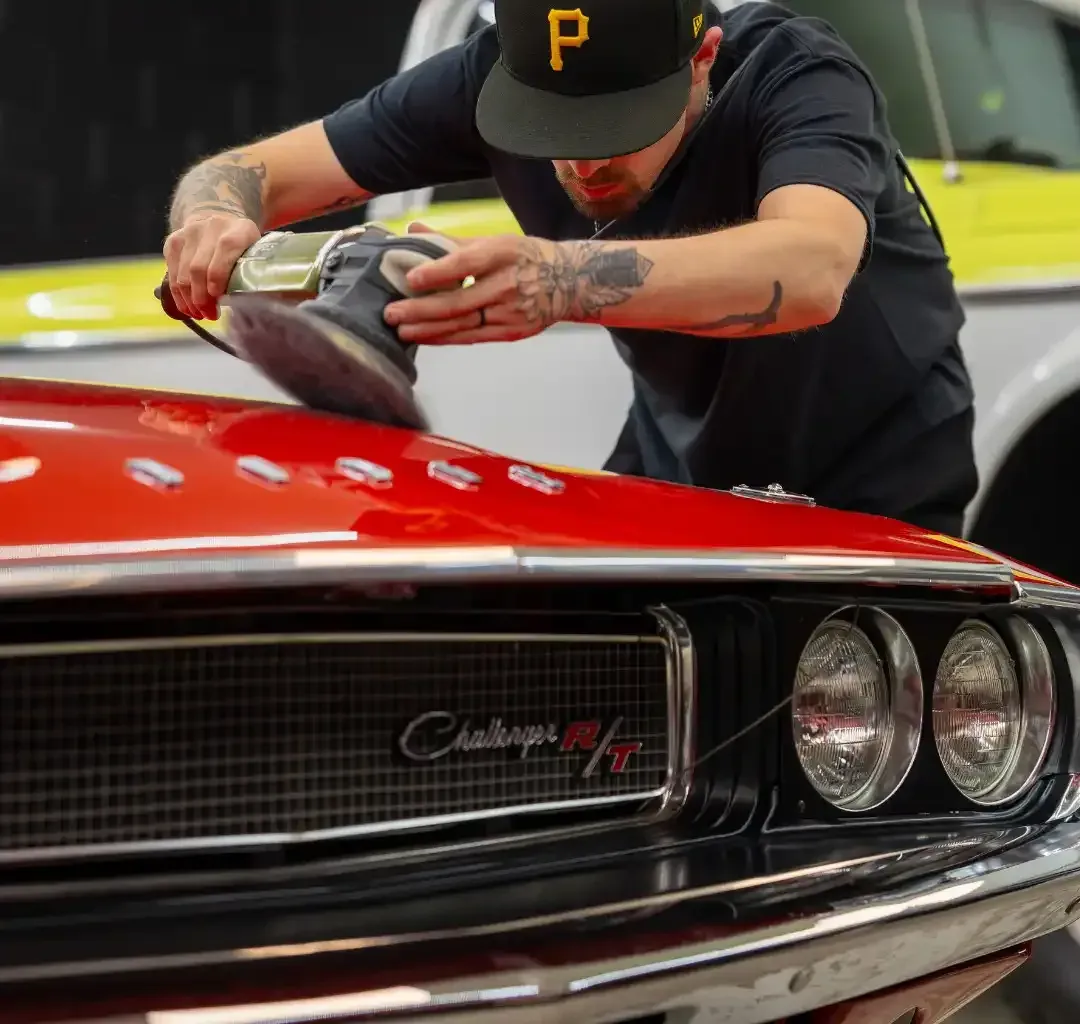
What Is Paint Correction?
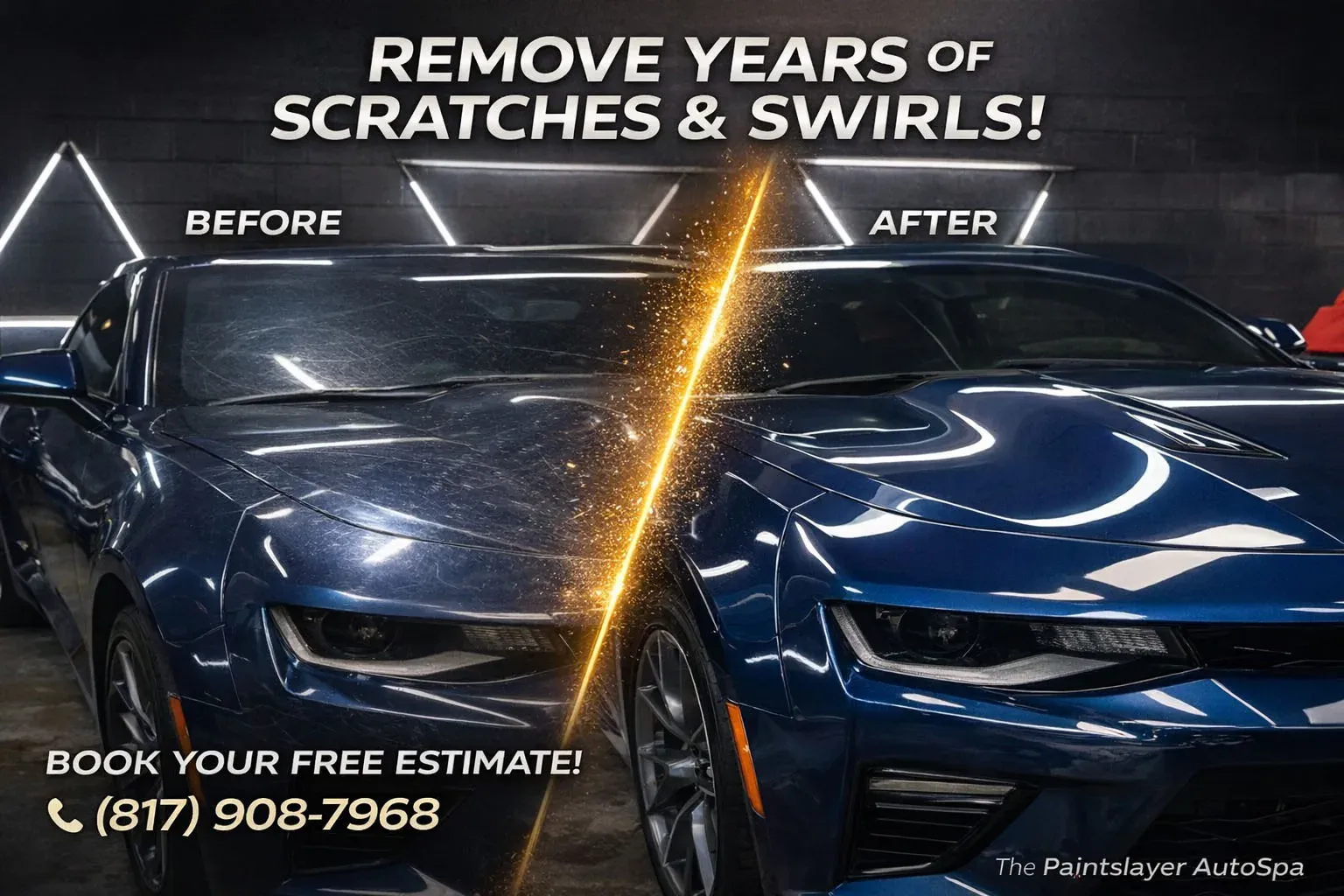
Paint correction is a hands-on process of removing imperfections from your vehicle’s clear coat. Swirl marks from improper washing, fine scratches from everyday driving, water spots, bird etching, and oxidation from UV exposure all accumulate over time. Most of these defects sit in the clear coat layer — the transparent protective coating over your base paint.
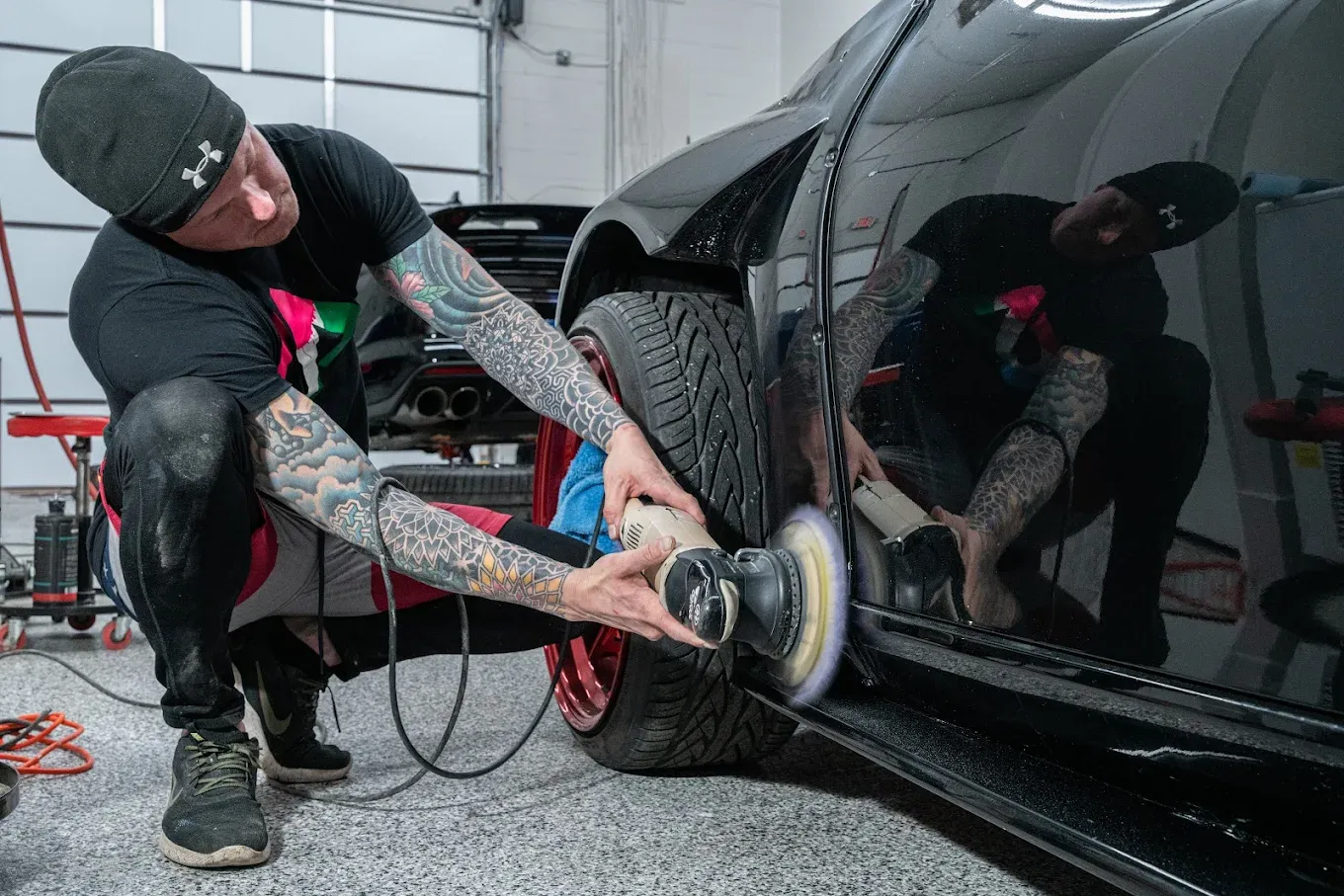
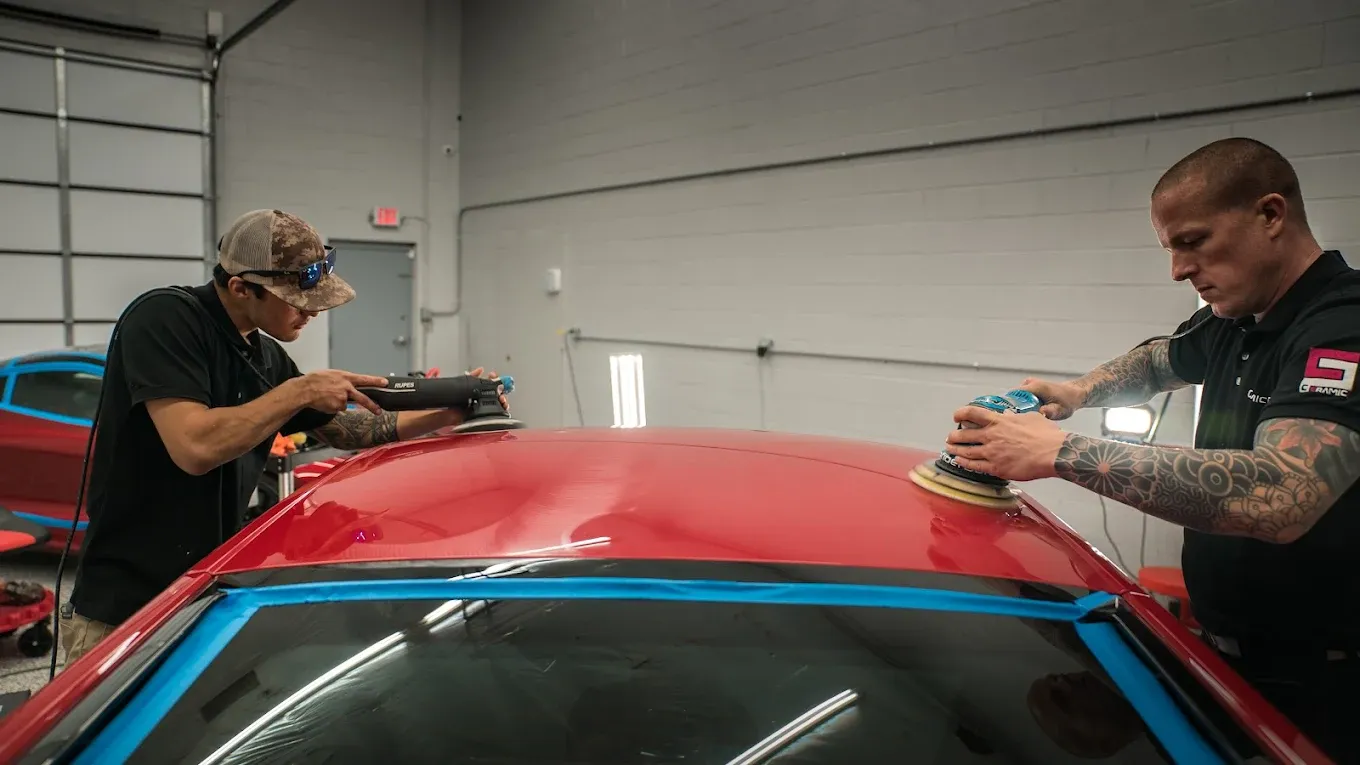
Using a combination of machine polishing, specialized compounds, and finishing pads, paint correction carefully levels the clear coat to eliminate those imperfections. The result is a surface that reflects light evenly, producing deep gloss and mirror-like clarity. This is not a quick buff with a rotary — it is a multi-step process that requires patience, skill, and the right tools for each vehicle’s paint system.
Why Amarillo Vehicles Need Paint Correction
The Texas Panhandle is tough on paint. Blowing dust and sand along the I-40 corridor create fine scratches that build up season after season. Intense UV exposure fades and oxidizes clear coats faster than in milder climates. Hail damage, while sometimes dent-related, also leaves micro-marring across painted surfaces. And those automated car washes along Coulter Road and Bell Street? Their brushes leave behind the swirl marks that make your paint look hazy under direct sunlight.
Whether you drive a daily commuter through the Wolflin Historic District or a lifted truck across the Western Plateau, Amarillo’s conditions mean your paint takes a beating that regular washing cannot undo.
Our Paint Correction Process
Vehicle Assessment
Every paint correction starts with a thorough inspection. We use high-intensity lighting to map out every swirl, scratch, water spot, and area of oxidation. We also measure your clear coat thickness with a paint depth gauge to determine exactly how much correction is safe for your specific vehicle.
Decontamination Wash
Before any polishing happens, the surface needs to be completely clean. We perform a multi-stage wash including a foam pre-wash, hand wash, iron decontamination, and clay bar treatment to remove bonded contaminants. Polishing over embedded dirt would create more damage — so this step is not optional.
Multi-Stage Polishing
Depending on the severity of your paint’s condition, we use a one-stage, two-stage, or three-stage polishing approach. Heavier defects require a cutting compound first, followed by a medium polish, and finished with a fine polish. Each stage uses different pad and compound combinations matched to your vehicle’s paint hardness.
Final Refinement and Protection
After correction, we refine the finish to ensure uniform clarity across every panel. At this stage, we recommend applying a ceramic coating or paint sealant to lock in the results and protect your corrected paint from future damage.
Benefits of Professional Paint Correction
Restore Your Vehicle’s Value
Paint condition is one of the first things buyers notice. Corrected paint looks newer and better maintained, which directly impacts resale and trade-in value. If you are planning to sell or trade your vehicle, paint correction is one of the highest-return investments you can make.
Remove Years of Accumulated Damage
Every car wash, dust storm, and summer of UV exposure leaves its mark. Paint correction removes those layers of accumulated damage to reveal the clean, deep finish underneath. Vehicles that look worn and tired can look showroom-fresh after a proper correction.
Prepare for Long-Term Protection
Paint correction creates the ideal foundation for protective coatings. Applying a ceramic coating or paint protection film over corrected paint ensures you are sealing in a flawless finish rather than locking in existing defects.
Improve Depth and Gloss
There is a dramatic visual difference between corrected and uncorrected paint. When light reflects evenly off a defect-free surface, the color appears richer and deeper. Black vehicles especially benefit — going from gray and hazy to liquid-deep gloss.
Signs Your Vehicle Needs Paint Correction
Take a close look at your paint under direct sunlight or a bright garage light. Do you see a web of fine circular scratches? Those are swirl marks. Are there visible scratches that catch your fingernail? Light to moderate scratches can often be corrected. Does the paint look chalky, faded, or hazy? That is oxidation breaking down the clear coat. Water spots that will not wash off have etched into the surface and need correction. If your paint has lost its gloss and depth despite regular washing, it is time for professional paint correction.
What Affects the Cost?
Paint correction pricing depends on several factors: the size of your vehicle (a sedan versus a full-size truck), the severity of the defects (light swirl removal versus heavy scratch correction), and the number of polishing stages needed. Single-stage correction for light swirls takes less time than a full three-stage correction on heavily damaged paint. We assess every vehicle individually and provide a clear quote before work begins — no surprises.
Frequently Asked Questions
How long does paint correction take?
A single-stage correction on a sedan typically takes 4-6 hours. Multi-stage corrections on larger vehicles can take a full day or more. We do not rush the process — thorough correction requires time to get right.
Will paint correction remove deep scratches?
If a scratch has gone through the clear coat into the base paint, polishing alone cannot remove it. However, many scratches that look deep are actually in the clear coat and can be significantly improved or fully removed through correction.
How often should I get paint correction done?
With proper maintenance and a protective coating, you should not need frequent correction. Most vehicles benefit from correction once every few years, or as a one-time service before applying ceramic coating or PPF.
Is paint correction safe for my vehicle’s paint?
Yes, when performed by a skilled technician using proper techniques and paint thickness measurements. We always measure clear coat depth before and during the process to ensure we stay within safe limits.
What is the difference between paint correction and a regular polish?
A regular polish or “buff” is typically a single quick pass that may mask defects temporarily. Paint correction is a multi-step process that permanently removes defects from the clear coat, producing results that last rather than washing away.
Can you correct paint on any vehicle?
We work on everything from daily drivers to exotic sports cars, trucks, motorcycles, and classic vehicles. Different paint systems require different approaches, and we adjust our methods accordingly for each vehicle that comes through our shop.